

Halloween can be challenging for families managing food allergy. A plan for treats, school parties, and emergencies can help your child take part with less uncertainty. The goal is to reduce risk while making room for the fun; no candy list or event can guarantee safety for every allergy.
The Teal Pumpkin Project is one way to help every child join in. Before you go out, decide how you will handle treats. Set candy rules, and go over your child's emergency plan. Start by planning what to do with the candy your child brings home.
Why Halloween with Food Allergies Calls for Extra Care
Which treats are suitable depends on your child's specific allergies and care plan. Keep candy in the collection bag until a responsible adult checks it. Do not assume a familiar brand, an allergy-friendly claim, or another family's recommendation makes a treat safe for your child.
Why Candy Labels Need a Fresh Look
Read the full ingredient list and allergen information every time. Recipes, manufacturing practices, and seasonal or fun-size versions can differ. If an individual wrapper lacks complete information, verify the exact product and size using its original packaging or the manufacturer; do not rely on a label for a different version.
The FDA's food-label guidance explains that precautionary statements such as 'may contain' are voluntary. Their absence does not guarantee freedom from cross-contact. Discuss how to handle these statements with your child's allergist. A nutrition database cannot establish that a particular treat is safe.
Sesame is one of the nine major allergens that must be declared on FDA-regulated packaged foods when present as an ingredient. The FDA's sesame allergen labeling guidance explains the requirement. Foods outside these rules and allergies beyond the major nine still require careful ingredient review.
Set Uncertain Candy Aside
Set aside unwrapped, homemade, or incompletely labeled treats unless you can reliably verify ingredients and preparation against your child's plan. Contact the manufacturer if needed. If uncertainty remains, choose a known suitable alternative. Do not let your child taste a treat to test whether it is safe.
What the Teal Pumpkin Project Means and How Families Can Join
Staying home but still want to join the fun? The group FARE (Food Allergy Research & Education) runs the Teal Pumpkin Project. It asks families to hand out treats that aren't food and to put out a teal pumpkin. This helps kids with food allergies and other health needs join in.
Make Your Teal Pumpkin Easy to Spot
Paint a pumpkin teal or hang a Teal Pumpkin sign where families can see it. FARE has free signs you can print. Not everyone knows what the color means, so tell kids and parents which treats are not food.

Keep Treat Choices Separate
Put non-food treats in their own bowl, away from the candy. Let each child pick. Don't ask kids to explain their allergies.
A teal pumpkin lets families know that non-food treats are available. It doesn't mean your home is free of allergens.
Non-Candy Halloween Treats Kids Will Actually Enjoy
Small prizes give kids something fun to collect and take home. You might offer:
-
Stickers and age-appropriate temporary tattoos
-
Pencils, crayons, and erasers without small detachable parts
-
Glow sticks used according to age and safety instructions
-
Bubbles and other age-appropriate non-food prizes
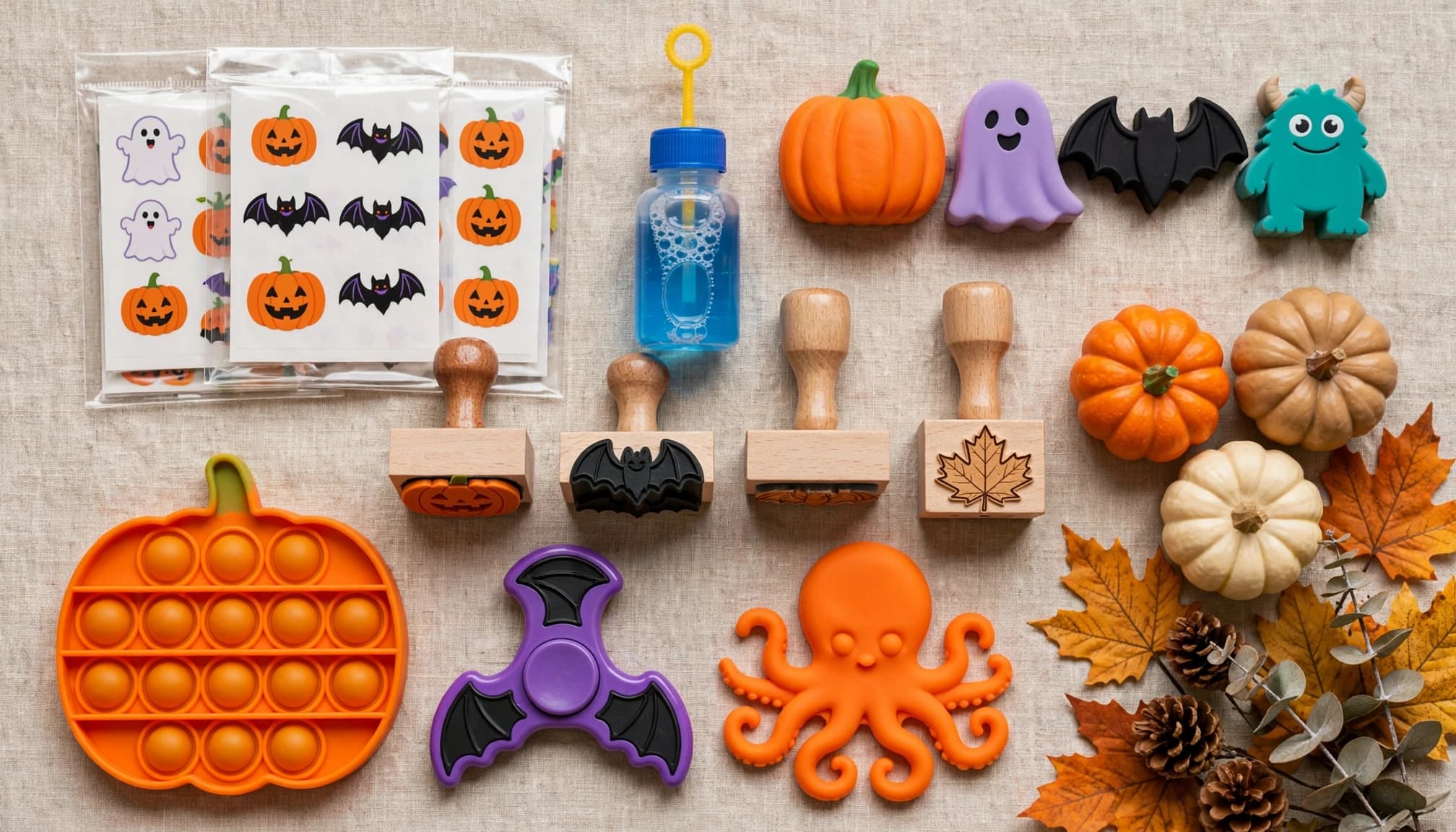
Check age labels and choking warnings. Avoid small parts for young children and let caregivers choose. Some non-food products contain allergens, including wheat in some modeling dough and latex in some toys. Choose options suited to the child's needs; non-food does not automatically mean allergen-free.
Before Trick-or-Treating, Make a Simple Safety Plan
Making the rules together helps your child feel included. It also gives the grown-ups a clear plan.
Agree on the Rules Before Leaving Home
Tell your child that all candy stays in the bag until a grown-up checks it at home. Bring a safe snack your child already likes, so they have something to eat while others eat candy.
Keep the talk calm and simple. When your child knows what to expect, they can relax and have fun.
Prepare the Adults and Supplies
Before you leave, review these steps:
-
Read every candy label before your child eats it.
-
Carry two doses of your child's prescribed epinephrine, check expiry dates, and protect the devices from temperature extremes as directed.
-
Make sure every adult on the walk knows your child's written emergency plan.
-
Keep epinephrine accessible to a trained adult, not left in a car or an inaccessible bag.
Every supervising adult should know how to use the prescribed epinephrine device and when to call 911. Bring a phone. For school parties, confirm food arrangements and who will hold and administer emergency medicine. Handwashing with soap and water helps remove food residue; hand sanitizer is not a reliable substitute for removing food allergens.
Use a Candy Swap to Keep the Fun Going
When you get home, sort the candy together. Take out anything that is unsafe or unclear. Then trade it for treats your child can safely eat.
You could also trade candy for a small prize or a fun activity. Let your child pick the prize ahead of time, so the swap feels like something to look forward to.
Focus on what your child can have, not what they can't. A swap should feel like part of the fun, not a punishment for having an allergy.
Know the Signs of an Allergic Reaction and When to Call 911
Warning signs can include trouble breathing, repetitive coughing or wheezing, a tight or hoarse throat, significant tongue or lip swelling, repeated vomiting, faintness, or widespread hives. Symptoms in more than one body system, such as hives with vomiting after eating, can signal anaphylaxis. Anaphylaxis can occur without skin symptoms. Review the signs of a serious reaction with your child's clinician before the event.
Follow the Emergency Plan Immediately
For suspected anaphylaxis, give prescribed epinephrine immediately according to the action plan and call 911. If epinephrine is unavailable, call 911 immediately. Do not wait for symptoms to worsen or for an antihistamine to work. Antihistamines and asthma inhalers do not replace epinephrine.
FARE's food allergy emergency care plan provides a template your child's clinician can personalize. Know the instructions for mild symptoms too, and watch closely for progression.
Stay With Your Child and Get Help Quickly
Stay with your child. Keep them lying flat if possible; if breathing is difficult, allow a position that eases breathing, and if vomiting, place them on their side. Do not let them stand or walk. If symptoms persist or return, give a second epinephrine dose according to the prescribed plan, commonly after about five minutes.
Follow the 911 operator's instructions and tell responders what happened and when epinephrine was given. Emergency assessment is needed even if symptoms improve. Home observation or a video visit is not a replacement for emergency care after suspected anaphylaxis.
When to Ask a Pediatric Allergist for Help
Ask your child's pediatrician or pediatric allergist about suspected food reactions, unclear avoidance advice, or an out-of-date emergency plan. Arrange routine planning before Halloween; active severe symptoms need emergency care.
Before the visit, write down what your child ate, how fast the symptoms started, and if it has happened before. List the symptoms you saw and any treatment you gave.
Bring previous test results and the emergency plan. Do not introduce a suspected trigger or change food avoidance solely on the basis of a test result without medical guidance. If your child also has asthma, review its control and action plan before the event.
Key Takeaways
-
Check every candy label before your child eats it.
-
Offer fun options everyone can enjoy, like non-food prizes and a candy swap.
-
Review the emergency action plan and carry two doses of prescribed epinephrine with a trained adult.
This post is for learning only. It does not replace advice from a doctor. Talk with your child's doctor about any questions.
Dr. Deepa Grandon provides allergy care for adults and children aged five and older. For help with your child's food allergy concerns, request an appointment with TLC Medical. Before booking, confirm that telehealth care is available in the state where your child will be during the visit. For children under five, your pediatrician can recommend the next steps, including an allergy referral if needed. Telehealth cannot replace emergency care, skin testing, or supervised food challenges.
Stay connected with news and updates!
Join our mailing list to receive the latest news and updates from our team.
Don't worry, your information will not be shared.
We hate SPAM. We will never sell your information, for any reason.