

Travel should feel exciting, not like a test of what your body can handle. When you're traveling with allergies, the trip often goes well if you plan for food, air, bedding, medicine, and emergencies before you leave.
Reactions are more likely when routines change. A new climate, a hotel room, a delayed flight, or one unsafe meal can throw off a stable routine fast.
The good news is simple: know your risks, pack the right items, and decide ahead of time how you'll handle trouble.
Know Your Allergy Risks Before You Leave
Every trip has its own pattern of exposure. A beach vacation brings different triggers than a mountain cabin, a city hotel, or an international flight. Because of that, your packing list should start with your body, not your destination.
Think through your main triggers before you book or pack. Food allergies are only one piece of the picture. You may also react to pollen, dust mites, pet dander, mold, insect stings, or even a new medicine. Some people do fine at home but flare up in hotel rooms with heavy drapes, old carpets, or feather pillows. Others react more during spring travel because tree or grass pollen is high where they're going.
List Your Triggers, Symptoms, And Emergency Signs
Write down the exact things that trigger reactions. Be specific. "Nuts" may be too broad, while "cashews and pistachios" is much clearer. The same goes for medicine reactions and insect stings.
Next, list what your symptoms usually look like. Mild symptoms may include itchy eyes, sneezing, a runny nose, a few hives, or mild stomach discomfort. Severe symptoms may include wheezing, throat tightness, swelling of the lips or tongue, fainting, or repeated vomiting.
That short note matters because details disappear fast when people are stressed. If a travel companion, flight crew member, or urgent care clinic needs to help, they won't have to guess what counts as normal for you and what counts as an emergency.
Check The Destination For Common Exposure Risks
Your location changes what you breathe, touch, and eat. A beach trip may bring mold in damp lodging, seafood exposure, or heavy sunscreen and insect spray use. A mountain stay may bring pine pollen, wood smoke, and cabins with dust or pet exposure. In cities, hotel ventilation, traffic pollution, and restaurant cross-contact can be bigger issues than plants.
International travel adds another layer. Ingredient labels may look different, medicine brand names may change, and a nearby pharmacy may not carry what you need. Even domestic road trips can be hard if you're driving through rural areas with fewer medical options.
If food reactions are one of your risks, reviewing your action plan before departure can help you spot weak points before you're far from home. It can help you spot weak points before you're far from home.
Build Your Allergy Travel Packing List
A suitcase can hold plenty of clothes, but it can't fix a missing rescue medicine. Your allergy kit should stay organized, easy to reach, and ready for delays.
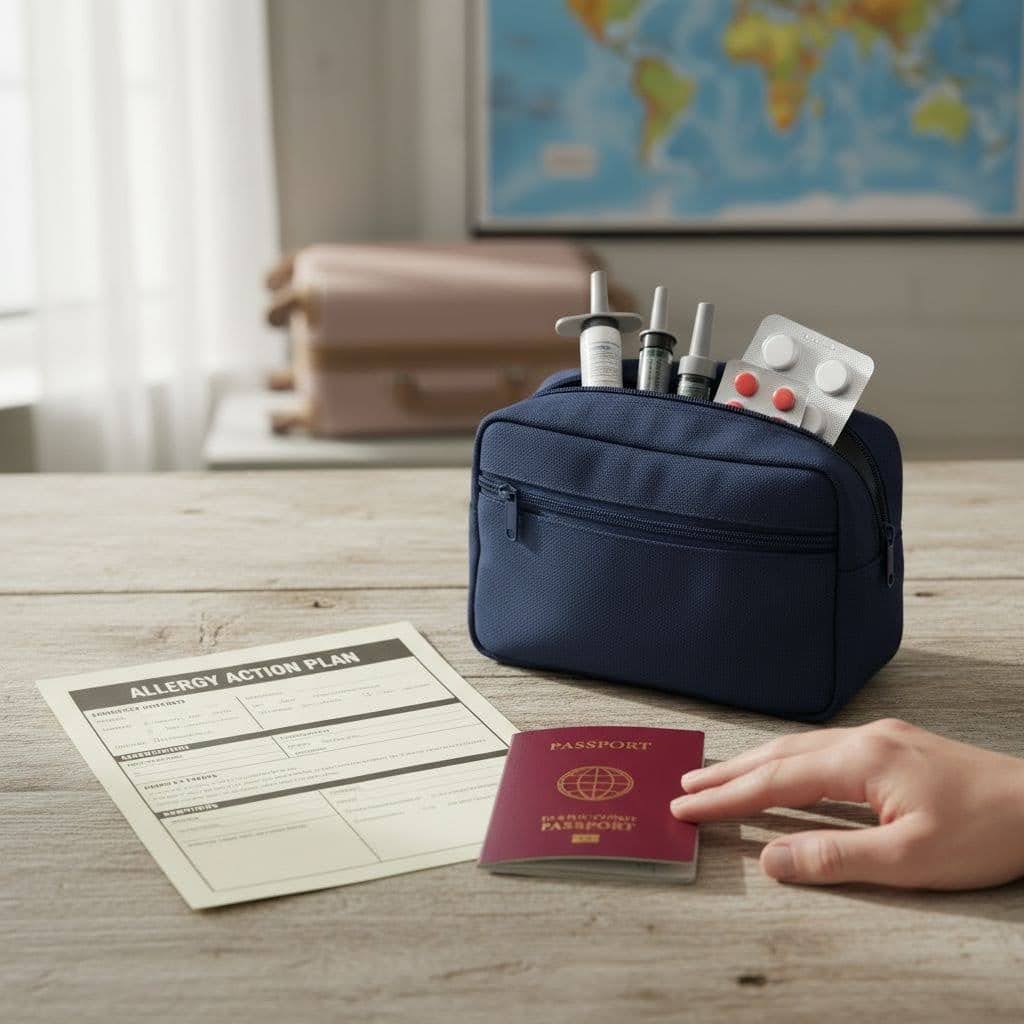
Pack Medicines And Supplies In Your Carry-On
Keep all allergy medicine with you, not in checked luggage. Bags get delayed. Flights get rerouted. Cars break down. You need access during the trip, not after it.
These items belong in your carry-on or day bag:
|
Item |
Why It Stays With You |
Quick Note |
|
Daily allergy medicine |
Missed doses can trigger symptoms |
Pack extra for delays |
|
Antihistamine |
Helps with mild symptoms if your doctor recommends it |
Check expiration dates |
|
Epinephrine auto-injector, if prescribed |
Fast treatment matters in severe reactions |
Keep two if you've been told to carry two |
|
Inhaler, spacer, or other breathing medicine |
Airway symptoms can worsen fast |
Store where you can reach it quickly |
|
Eye drops or nasal spray |
Helps control daily flare-ups |
Bring enough for the whole trip |
Keep medicine in original containers when possible. That helps with airport questions, pharmacy refills, and mistakes during a rushed moment.
Keep rescue medicine close enough to grab with one hand.
Bring Documentation And Backup Information
Pack paper copies of your allergy action plan, prescriptions, and emergency contacts. Then save photos or PDFs on your phone. If your wallet disappears or your phone dies, you'll still have one version available.
Include the medicine name, dose, how often you take it, and what to do for mild versus severe symptoms. If you use a rescue medicine, note when to use it and when to call emergency services. For international travel, a brief translated note about severe allergies can help at restaurants or clinics.
This paperwork also helps if you need urgent care far from home. A quick pre-trip review with an expert telehealth allergist can be useful if your symptoms have changed or your action plan is out of date.
Add Food, Cleaning, And Comfort Items That Reduce Exposure
Small comfort items can lower your daily risk. Pack safe snacks you already trust, especially for flights, road trips, and long layovers. A delayed meal is stressful enough without having to gamble on unknown ingredients.
Travel wipes help with tray tables, armrests, hotel remotes, and restaurant high-contact surfaces. Hand sanitizer is helpful, and some people also prefer an alcohol-free cleanser for skin that gets irritated. If dust or bedding triggers symptoms, bring a pillow cover or a lightweight travel sheet. If pollen or strong scents bother you, a well-fitted mask may help in airports, on public transit, or outdoors on high-pollen days.
A small insulated bag can also help if certain foods or medicines need temperature control. The goal isn't to pack your whole house. It's to reduce the exposures you can predict.
Prevent Reactions Before They Start
Packing matters, but habits matter too. Most travel problems start with assumptions, such as thinking the hotel knows what "allergy-safe" means or assuming a server understands cross-contact.
Call Airlines, Hotels, And Restaurants Ahead Of Time
A short phone call can save a lot of stress later. Ask the airline what they can note on your reservation and what they cannot guarantee. Policies may vary significantly, where some carriers can accommodate allergy-related requests, while others recommend personal precautions such as wiping your area and bringing your own food.
Call your hotel and ask about room cleaning, air fresheners, feather bedding, and pet-friendly floors. If pet dander or mold causes problems, ask direct questions before arrival. At restaurants, ask how they handle shared fryers, grill space, sauces, and ingredient changes.
Then confirm the details again a day or two before you leave. Travel plans shift, and verbal promises made weeks earlier may not reach the staff on duty.
Use Safe Food And Handwashing Habits On The Road
Read labels every time, even for foods you've bought before. Ingredients change, and a familiar brand in a new location may not be identical.
When eating out, explain the allergy clearly and ask about cross-contact, not only ingredients. Shared knives, cutting boards, fryers, buffet spoons, and dessert counters can all cause trouble. If answers sound vague, choose something packaged and labeled, or eat the safe food you brought.
Handwashing also matters more than people think. Wash with soap and water before eating whenever you can. Wipe surfaces before placing food down. Those habits help with food reactions, and they also cut down exposure to dust, pet residue, and pollen that sticks to hands and clothing.
Know When To Speak Up And When To Get Help
Tell people early. Travel companions should know your triggers, where your medicine is, and what symptoms mean "act now." Hosts, servers, guides, and family members need the same basic information.
Don't downplay symptoms to avoid awkwardness. If you feel your throat changing, your breathing getting tight, or your body reacting in a way that is outside your normal pattern, say so right away. Minutes matter more than politeness.
Seek medical attention promptly if symptoms continue to worsen or if prescribed medication is not producing the expected response. Travel is not the time to wait and hope.
What To Do If An Allergy Reaction Happens
Even great planning can't remove every risk. That's why your response plan matters as much as your packing list.
Use Your Action Plan Without Delay
If a reaction starts, stop eating or leave the trigger area right away. Then follow your personal allergy action plan instead of guessing. Use the medicine your doctor has prescribed for that situation, and note the time.
Ask a travel companion to stay with you. They should know what you took, when you took it, what likely triggered the reaction, and when to call emergency services. If you're in a public place, tell staff clearly that you're having an allergic reaction and need help.
Fast action matters because symptoms can change quickly. A mild reaction does not always stay mild.
Know The Red Flags That Need Emergency Care
Some symptoms need urgent treatment right away. Get emergency help if you have:
- Trouble breathing or noisy breathing
- Throat tightness or trouble swallowing
- Swelling of the tongue, lips, or face
- Widespread hives with other symptoms
- Repeated vomiting after exposure
- Confusion, weakness, or fainting
If severe symptoms start, call 911 in the US, or the local emergency number if you're abroad. If epinephrine has been prescribed for you, use it as directed and seek emergency care without delay.
Key Takeaways
- Safe travel starts before you leave. Knowing your triggers, writing down your symptoms and emergency signs, and researching your destination in advance removes most of the guesswork.
- Your medicine belongs in your carry-on, always. Checked bags get delayed—your rescue medicine cannot afford to be in one.
- Assumptions are where most travel reactions start. Call airlines, hotels, and restaurants ahead of time and confirm details again the day before you leave.
- Simple habits lower daily exposure significantly. Reading labels every time, washing hands before eating, and wiping high-contact surfaces are small steps that make a real difference.
- A reaction plan matters as much as a packing list. Know what you'll do, who will help you, and when to call emergency services before you ever need to use that information.
What's Next For You
Traveling with allergies gets easier when your action plan is current, your medicines are right for where you're going, and you know exactly what to do if something happens. A pre-trip consultation can make all of that clearer before you leave home.
If you are currently experiencing symptoms, we encourage you to speak with your primary care physician. You are also welcome to join our waitlist now for a future consultation with Dr. Grandon.
Stay connected with news and updates!
Join our mailing list to receive the latest news and updates from our team.
Don't worry, your information will not be shared.
We hate SPAM. We will never sell your information, for any reason.