What You Need to Know About Vaccine Hesitancy, Allergies, and Misinformation w/ Dr. Joyce Yu
Jun 11, 2026Why are more people becoming afraid of vaccines than the diseases vaccines were created to prevent? The answer is not simply a lack of information. In many ways, vaccines have become victims of their own success.
For decades, widespread vaccination helped push diseases like measles, polio, pertussis, and smallpox out of everyday life. Many of us no longer live with the visible fear of these infections, their complications, or the way they can destabilize families, communities, and healthcare systems.
But when the disease feels distant, the vaccine can start to feel like the bigger threat.
That shift is now changing public health.
Rather than assuming vaccine hesitancy is only about ignorance or defiance, we need to look more carefully at:
• why people can become more suspicious of vaccines when they no longer see the diseases vaccines helped control
• How misinformation, fear, personal experience, politics, history, and social media can shape health decisions
• Why highly educated people can still be vulnerable to vaccine misinformation
• how confusing a side effect, adverse event, or normal immune response with a true allergy can create long-term fear
• Why egg allergy is no longer the vaccine barrier many people still believe it is
• And how declining vaccination rates can allow diseases like measles and pertussis to reemerge
Vaccines are a victim of their own success because they work so well to protect us from diseases. People have become a little complacent and say, ‘Well, I’m fine. Why do I need to get a vaccine?’ So they become more leery of the vaccine itself than the disease. -Dr. Joyce Yu
Vaccine education has to move beyond simply telling people what to do. We need clearer, more compassionate conversations that acknowledge fear while helping people separate facts from fiction.
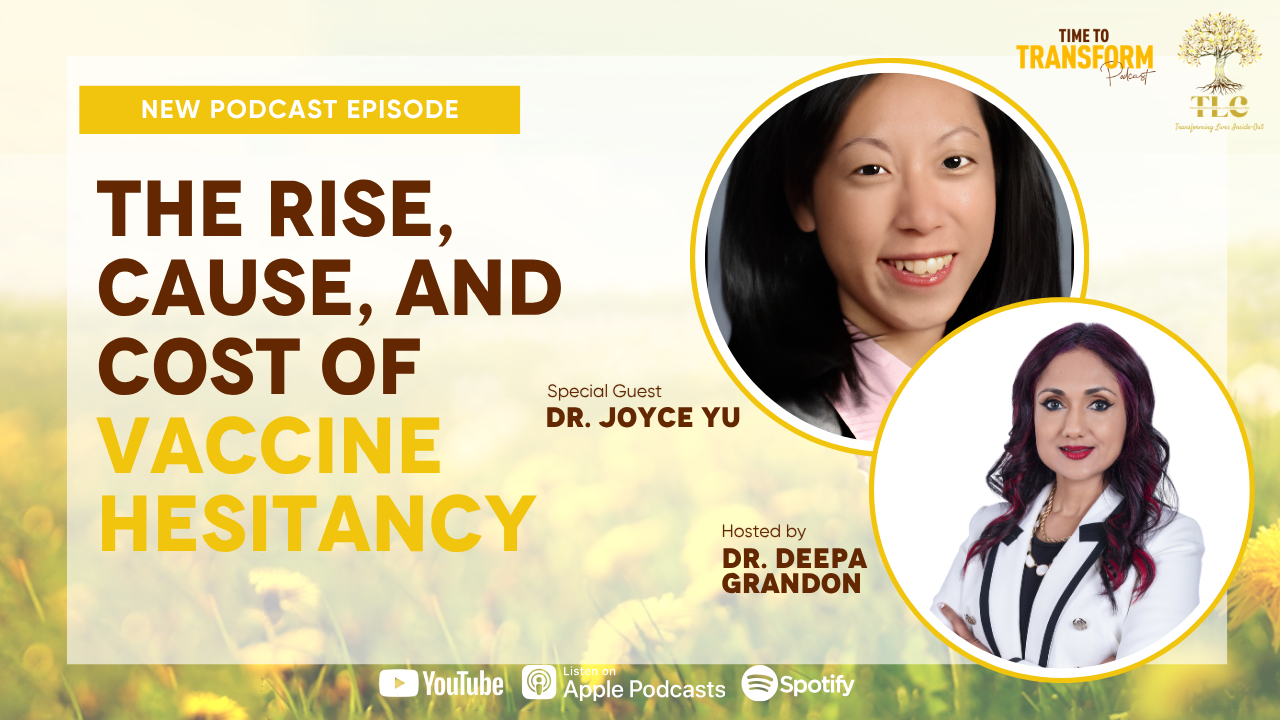
In this upcoming episode, I’m joined by Dr. Joyce Yu, associate professor of pediatrics and director of the Food Allergy Program at Columbia University Irving Medical Center.
Together, we explore:
- What is driving the rise of vaccine hesitancy
- Why vaccine-preventable diseases can return when communities let their guard down
- How allergists help patients understand whether a vaccine reaction is truly an allergy
- And why rebuilding trust requires listening, clarity, and evidence-based conversation
If you or someone you love has ever felt uncertain, afraid, or confused about vaccines, allergic reactions, side effects, or conflicting health information, this conversation offers a grounded look at how fear spreads, how misinformation takes hold, and why protecting public health depends on rebuilding trust.
Stay connected with news and updates!
Join our mailing list to receive the latest news and updates from our team.
Don't worry, your information will not be shared.
We hate SPAM. We will never sell your information, for any reason.