

Allergy symptoms can blur together. A runny nose, itchy eyes, congestion, hives, and sinus pressure may all feel related, but the most effective allergy treatment depends on identifying your primary symptom, how fast you need relief, your age, and your health history. That is why grabbing the first box with "allergy" on it often leads to mixed results.
Know the Main Types of Allergy Medicine and What They Do
The shelves can feel crowded, yet most options fall into a few main groups. This quick comparison helps sort them out.
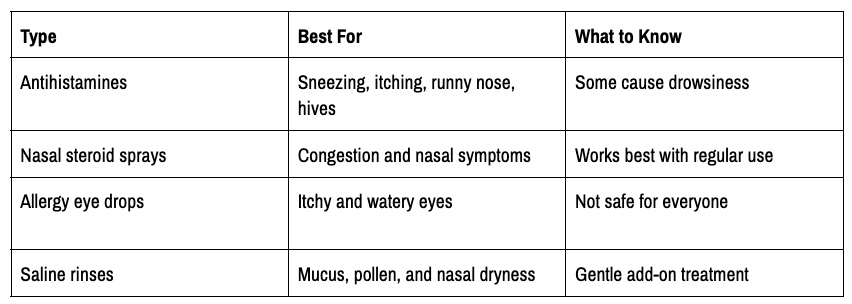

The big takeaway is simple: some medicines stop the itch, while others reduce swelling or wash irritants out.
- Sneezing, itching, runny nose → antihistamine
- Stuffy nose → nasal steroid spray
- Itchy, watery eyes → allergy eye drops
- Hives → antihistamine
- Thick mucus → saline rinse
Antihistamines Less Likely To Cause Drowsiness
Newly released antihistamines are often less likely to cause drowsiness, though some people still feel sleepy on them. They are usually a better pick for work, school, or driving because they tend to affect reaction time less.
Older antihistamines can work, too, but they are more likely to cause sleepiness, dry mouth, and grogginess the next day. Because of that, timing matters. A medicine that feels fine at bedtime may be a poor choice before a morning commute.
Nasal Sprays For Control
These sprays are often the strongest everyday option for nasal allergies, especially when congestion is front and center. They do not work like a quick fix, though. Many people notice improvement over several days, and full benefit often requires consistent daily use for 1–2 weeks.
That is why regular use matters. If you only use the spray once in a while, you may never get the payoff. Depending on the spray, you may need to be wary of its use, as it can create rebound congestion. Speak with your physician if you are unsure of how long to use it.
Decongestants, Eye Drops, And Saline Rinses
Decongestants can shrink swollen nasal tissue fast, which is why they are tempting. Still, they are best for short-term help, not a long-term habit, as overuse can cause a worse stuffy nose called rebound congestion.
Meanwhile, allergy eye drops can target itchy, watery eyes without affecting the rest of your body much. Saline rinses are even gentler. They help wash out pollen, dust, and mucus, and they pair well with other treatments.
Match The Medicine To The Symptom, Not Just The Label
Most allergy medicines help one problem more than another. The right choice starts with the most bothersome symptom. That small shift matters because it can improve relief and reduce side effects.

Sneezing, A Runny Nose, and Itchy Eyes Usually Respond to Antihistamines
When allergies trigger the allergy chemical release, you often get the classic pattern: sneezing, a dripping nose, itching, and watery eyes. Oral antihistamines can calm those symptoms fairly well, especially for pollen, dust, mold, and pet allergies.
They work best when the allergy chemical is the main driver. So, if your nose is running nonstop and your eyes itch every spring, an antihistamine often makes sense.
Nasal Congestion Often Needs A Different Approach
A blocked nose is stubborn. Antihistamines may help a little, but they often do not fully open swollen nasal passages.
For ongoing congestion, anti-swelling nose sprays are often the better choice. They reduce swelling inside the nose, which is why they help with stuffiness, sneezing, and drip over time. Short-term stuffiness medicines can help some people, too, but they are not a fit for everyone, especially if blood pressure or heart issues are a concern.
Hives and Itchy Skin May Need Fast Relief
Hives often respond to oral antihistamines because the allergy chemical is a common cause of raised, itchy welts. If the rash is mild and you feel well otherwise, that may be enough.
Widespread hives, swelling of the lips or tongue, wheezing, or trouble breathing require urgent medical care.
When To Take Allergy Medicine For The Best Results
The right medicine can still disappoint if the timing is wrong. Many allergy treatments work better when you use them before symptoms build up.

Take It Before Symptoms Hit If You Know Your Triggers
If pollen counts rise every April, or you know a visit to a house with cats will set you off, pre-treatment can help. Taking medicine before exposure often works better than waiting until your eyes burn and your nose is already swollen.
This matters most with predictable triggers. Planned yard work, outdoor sports, and weekend travel during allergy season are common examples.
Use Daily Medicine When Symptoms Last For Weeks
Some allergy problems act like a faucet left on low. The symptoms are not awful every hour, but they keep coming back. In that case, daily treatment often works better than taking medicine only on your worst days.
Anti-swelling nose sprays are a good example. They help most when used on a schedule. A simple routine, such as every morning after brushing your teeth, makes it easier to stay consistent.
Choose As-Needed Medicine For Occasional Flare-Ups
If symptoms only happen once in a while, daily treatment may be more than you need. An as-needed antihistamine, eye drop, or saline rinse can be enough for mild or rare flare-ups.
Still, read the label each time. Many cold and allergy products overlap, and it is easy to repeat the same ingredient without realizing it.
Safety Checks That Matter Before You Buy Or Combine Treatments
A medicine can be common and still be the wrong choice for you. Age, pregnancy, breastfeeding, blood pressure, glaucoma, prostate problems, and other medicines all change what is safest.
That is why the label matters, but your health history matters more.
Watch For Sleepiness, Dry Mouth, And Slowed Reaction Time
Older antihistamines are the biggest troublemakers here, but any allergy medicine can affect people differently. If you feel drowsy, foggy, or slowed down, driving and work can become less safe.
Children may react in odd ways as well. Some get sleepy, while others become wired or restless. For that reason, a product that seems harmless for one person may be a poor fit for another.
Be Careful With Decongestants If You Have Certain Health Conditions
Decongestants can raise blood pressure, worsen racing or pounding heartbeat, and make anxiety or insomnia worse. If you already deal with high blood pressure, heart rhythm problems, panic symptoms, or poor sleep, check with a doctor before using them.
The same caution applies if you are pregnant, breastfeeding, or buying medicine for a young child. Safer options may be available, but they depend on the person.
Do Not Double Up on the Same Main Medicine
This is one of the easiest mistakes to make. You take one pill for allergies, then another for a cold, and both contain the same antihistamine or decongestant.
Look at the main medicine list, not only the brand name on the front. If you are not sure what overlaps, ask a pharmacist or doctor before combining products.
When Allergy Symptoms Need a Doctor Instead of Another Pill
Sometimes the problem is not simply allergies. At other times, the diagnosis is correct, but the plan is too weak for what your body needs.

Signs the Symptoms May Be Asthma, a Sinus Infection, or Something Else
A stuffy nose is not always caused by allergies. Thick discolored drainage, facial pain, fever, or one-sided pressure may point to a sinus infection. Wheezing, chest tightness, or shortness of breath can suggest asthma.
A cough that lingers for weeks also deserves a closer look. Mucus draining down the back of the throat can cause coughing, but so can reflux, asthma, and infection. If the pattern does not fit your usual allergy seasons, get it checked.
Why Repeated Flare-Ups May Need a Long-Term Plan
If you keep cycling through medicines with only partial relief, the current plan is probably missing something. The trigger may be unclear, the timing may be off, or the diagnosis may need another look.
If you are noticing these patterns, the next step is not to guess—it is to get a clear, structured plan. Start by tracking your symptoms, triggers, and over-the-counter medicine use, then review this with your physician. If you want a deeper look at what may be driving your symptoms, TLC offers a whole-person, root-cause approach to allergy care. You can join the waitlist for updates on upcoming telehealth visits.
That is when allergy and immunology services can help, including allergy immunotherapy (allergy shots or allergy tablets), which may be an option when medications alone are not providing adequate relief. Testing, trigger tracking, and a prevention plan often bring more relief than switching from one over-the-counter pill to the next.
Key Takeaways
- Match the medicine to your symptom, not just the label. Antihistamines target sneezing and itching, nasal sprays address congestion, and decongestants are for short-term relief only.
- Timing is just as important as what you choose. Pre-treating before known triggers will improve your results.
- Safety is personal. Always check the active ingredient list and consult your health history—not just the brand name—before choosing or combining products.
- Persistent symptoms deserve a structured evaluation. If allergies are affecting your sleep, breathing, or daily function, it is time to work with a physician.
TLC shares educational content only, and this is not personal medical advice.
Stay connected with news and updates!
Join our mailing list to receive the latest news and updates from our team.
Don't worry, your information will not be shared.
We hate SPAM. We will never sell your information, for any reason.