For nearly two decades, HRT carried a shadow. After the early interpretation of the Women’s Health Initiative study in the 1990s, the message across medicine was clear: hormones were dangerous.
Millions of women were left in a “hormone desert,” navigating menopause with little more than advice to just grin and bear it.
But recently, the initiative was reassessed, and the data tells a far more nuanced story.
HRT may play an important role in improving symptoms and supporting cognitive and mental health during midlife. The problem is: the mindset around HRT may now be swinging just as dramatically in the opposite direction.
Scroll through social media, and you might believe every woman should be on HRT.
Brain fog, mood swings, poor sleep, weight changes, and hormones are increasingly framed as the universal solution.
But menopause isn’t a single experience, and hormone therapy isn’t a single intervention. Some women benefit enormously from it, while others may not need it at all.
So how should women and their physicians approach hormone therapy? What do we know about HRT and its effects on mental health?
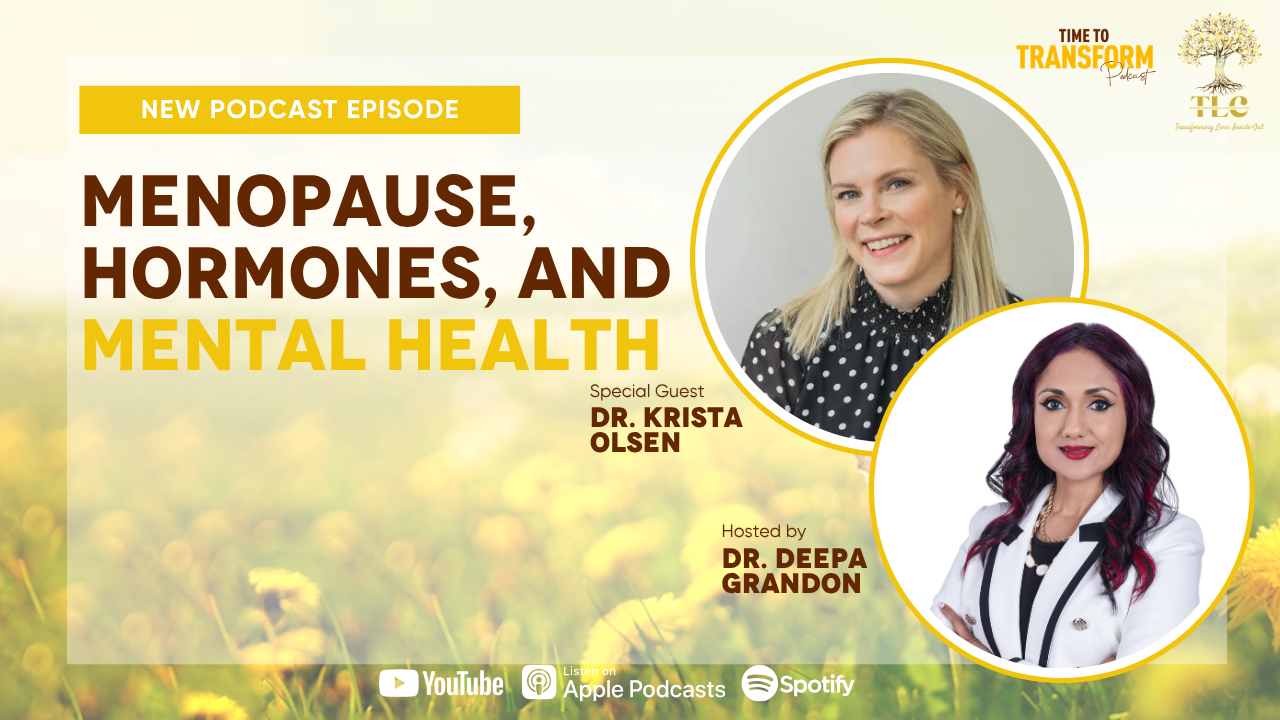
In this episode, I’m joined by the physician president of Obstetrics and Gynecology Associates and menopause-society certified practitioner, Dr. Krista Olsen.
We explore how the medical understanding of HRT has evolved and what the evidence actually says about mood, cognition, and mental health during menopause.
Everyone wants HRT because it’s seen as the fountain-of-youth. But we always bring it back to treating the symptoms. -Dr. Krista Olsen
Things You’ll Learn In This Episode
From common treatment to medical taboo
The Women’s Health Initiative reshaped women’s medicine almost overnight. How did its interpretation leave an entire generation of women navigating menopause without support?
HRT isn’t a one-size-fits-all solution
Hormone therapy is increasingly being framed as a universal solution for midlife women. When everyone is told they should be on HRT, what important clinical questions risk getting overlooked?
Hormone depletion vs. hormone fluctuation
Many of the most disruptive symptoms of perimenopause come from dramatic hormonal swings, not simply low estrogen. How does that distinction change how clinicians approach treatment?
Symptom-based care matters more than hormone levels
In an era of hormone testing kits and online wellness protocols, many women are being told to “optimize” their hormones. But what happens when treatment focuses on numbers instead of lived experience?
Stay connected with news and updates!
Join our mailing list to receive the latest news and updates from our team.
Don't worry, your information will not be shared.
We hate SPAM. We will never sell your information, for any reason.