

Why You Wake Up Congested Every Morning (And What It Means)
You wake up, reach for your phone, and realize you’re already breathing through your mouth. Your nose feels packed, your throat is dry, and your head has that dull, cottony fog. It’s hard to feel “rested” when you start the day fighting for air.
The good news is that morning congestion usually isn’t random. Most of the time, it’s your body reacting in a pretty logical way to what it breathed, dried out from, or got inflamed by overnight.
In plain language, morning congestion is usually two things happening at once: the lining inside your nose swells, and your body makes extra mucus to trap whatever it thinks is irritating you. This post breaks down the most common causes, what they can mean, simple steps you can try at home tonight, and when it’s time to get medical help.
What Morning Congestion is Really Telling You About Your Nose Overnight
Your nose is more than an airway; it’s a filter and a humidifier. Overnight, it’s working while you’re not thinking about it. When the nose senses irritation (like allergens, smoke residue, very dry air, or an infection), it responds with a protective reflex.
Here’s the basic biology, without the textbook language:
- The tiny blood vessels in the nasal lining open up, and the tissue swells.
- Mucus production goes up, so particles get trapped instead of heading straight to your lungs.
- Chemicals involved in allergy and irritation (including histamine) can make the lining more reactive and leaky.
Symptoms often feel worse right after waking because you’ve been lying still for hours. Drainage slows, mucus thickens, and your airway may have dried out. If you’re waking up congested most days, the goal isn’t to “power through.” The goal is to find the trigger and calm the inflammation.
For a quick medical overview of what nasal congestion is and why it happens, see this Cleveland Clinic guide to nasal congestion.
Why Lying Flat Can Make a Stuffy Nose Feel Worse by Morning
Gravity is quietly doing a lot of work when you’re upright. When you lie down, that help disappears.
While you’re horizontal:
- Mucus doesn’t drain as easily, so it can pool.
- Post-nasal drip can slide down the back of your throat and leave you with a sore, scratchy morning voice.
- One side may plug more, depending on sleep position. Many people notice the “bottom nostril” gets stuffier when they lie on their side.
If your nose is blocked, your body often switches to mouth breathing. That dries the throat, makes snoring more likely, and can leave you feeling worn out even if you slept a full eight hours.
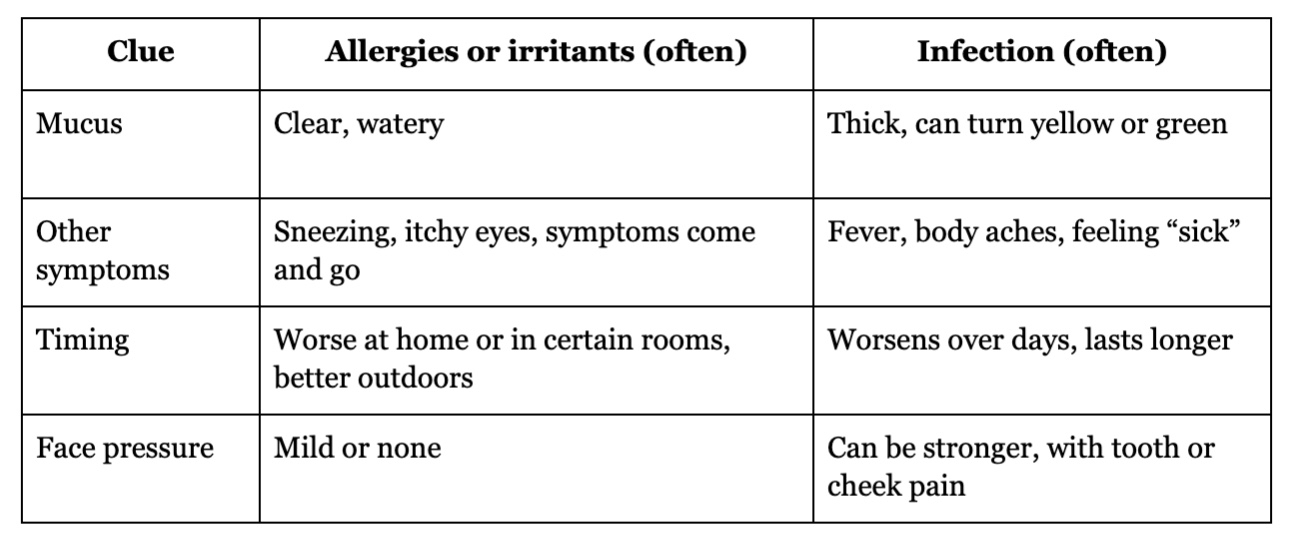
Inflammation vs Infection: How To Tell the Difference Most Days
Many people assume congestion equals infection. Often it doesn’t. Irritation and allergies can create swelling that feels just as intense as a cold.
Here’s a simple guide. It’s not perfect, but it helps you read the pattern.
The Most Common Reasons You Wake Up Congested Every Morning
Think of your bedroom like a tiny ecosystem. You spend about a third of your life in it, breathing the same air for hours. If that air is dry, dusty, or filled with triggers, your nose may protest every morning.
Below are the most common causes, starting with the usual suspects. Each one includes a quick “if this sounds like you” line so you can identify the pattern without trying to self-diagnose.
Bedroom Allergens, Especially Dust Mites, Pet Dander, and Mold
Bedding is one of the biggest reservoirs for allergens because it collects shed skin cells, hair, and dust. Dust mites feed on those skin flakes. It’s not the mites themselves that trigger symptoms; it’s proteins in their waste.
Common bedroom triggers include:
- Pillows and mattresses (dust mites love soft, warm places)
- Pets sleeping on the bed, or even just in the room
- Carpets, curtains, and stuffed items that hold dust
- Damp bathrooms nearby that support mold growth
A classic pattern is worse in the morning, then improves after you leave the house. If it flares seasonally, pollen can also hitch a ride indoors on clothing and hair.
For a clear explanation of why dust mites cause symptoms and where they hide, read Mayo Clinic’s dust mite allergy overview. If you suspect this is you, it’s also helpful to review Healthline’s guide to morning allergies.
If this sounds like you: you feel stuffy most mornings, sneeze after making the bed, and improve when you’re away from home.
Dry Indoor Air From Heat or AC That Irritates Your Nasal Lining
Your nose likes moisture. When indoor air is dry, mucus gets thicker, and the nasal lining becomes more irritated. Then it swells, which narrows the airway.
Dry air issues tend to show up in winter, when heat runs often, or year-round if you sleep under a vent or fan. Dehydration can add fuel to the fire, especially if you drink alcohol close to bedtime or you’re not drinking enough water during the day.
Many people feel best when bedroom humidity stays around 40 to 50%. Higher isn’t always better, because overly humid air can encourage mold. If you use a humidifier, keep it clean and change the water daily. A dirty humidifier can make congestion worse.
If this sounds like you: your nose is stuffy but also feels dry or “burny,” and you wake with a parched throat.
Nonallergic Rhinitis, When Your Nose Reacts to Smoke, Fragrance, Weather, or Spicy Foods
Some noses are just sensitive. Nonallergic rhinitis (also called vasomotor rhinitis) is when the nose overreacts to triggers that aren’t allergens. There’s no pollen protein involved, but the nasal lining still swells and produces mucus.
Common triggers include:
- Smoke (including candle smoke and fireplace residue)
- Strong fragrance (perfume, air fresheners, laundry scents)
- Cleaning sprays
- Cold air, or sudden temperature shifts
- Alcohol, spicy foods, and sometimes stress
It can look like allergies, but it often lacks the classic itchiness. People may have congestion and a drip without itchy eyes.
If this sounds like you, you’re fine outside, but certain smells or temperature changes make your nose run or block quickly.
Chronic Sinus Inflammation, Nasal Polyps, or a Lingering Infection
Sometimes, morning congestion isn’t mainly about the bedroom; it’s about ongoing swelling inside the nose and sinuses.
When the openings that drain the sinuses are inflamed, mucus can get trapped. That builds pressure, affects smell, and sets you up for repeated flare-ups.
Clues that point in this direction include:
- Congestion most days for weeks
- Reduced sense of smell
- Facial pressure or fullness
- Thick drainage that keeps returning
- Frequent sinus infections, or infections that seem to “never fully clear”
Nasal polyps (soft, noncancerous growths) can also block airflow. So can a deviated septum. These aren’t things you can confirm at home, but your symptom pattern can raise a flag.
If this sounds like you: congestion feels constant, not just in the morning, and you’re mouth breathing even during the day.
Reflux, Snoring, and Sleep Apnea Are Less Common but Worth Considering
A stuffy nose and poor sleep can feed each other. Congestion leads to mouth breathing and snoring. Snoring and airway vibration can inflame tissues. Some people also have nighttime reflux that irritates the throat and upper airway.
Sleep apnea is the most important condition in this group. It means breathing repeatedly pauses during sleep. Nasal blockage doesn’t always cause sleep apnea, but it can make symptoms worse.
Red flags include:
- Loud, regular snoring
- Choking or gasping at night
- Daytime sleepiness that feels out of proportion
- Morning headaches
- High blood pressure, weight gain, or trouble concentrating
If this sounds like you: you wake congested and exhausted, and your partner notices loud snoring or breathing pauses.
What It Can Mean for Your Health When Congestion Is an Everyday Pattern
A blocked nose isn’t just annoying. It can quietly erode sleep quality and daily energy levels. Nasal breathing helps filter and warm the air, and it supports better sleep in many people. When your body switches to mouth breathing, you may wake up more frequently without realizing it.
The bigger meaning behind daily morning congestion is usually ongoing inflammation. That inflammation might come from allergies, irritants, chronic sinus swelling, or sleep-related issues. The upside is that most of these causes are treatable, especially when you stop guessing and start tracking.
A simple approach is to note:
- Where you slept
- Whether pets were in the room
- Humidity level (if you have a cheap hygrometer)
- Any scent exposure (candles, cleaning products)
- Foods and alcohol close to bedtime
- Whether congestion improves after you leave home
That turns a frustrating symptom into useful information.
How Poor Sleep From a Blocked Nose Can Show Up in Your Day
You don’t need dramatic symptoms for sleep disruption to matter. Many people feel the effects as “low-grade off.”
Common signs include:
- Waking tired even after a full night
- Brain fog, slower thinking
- Irritability, low patience
- Needing extra caffeine to feel normal
- Dry throat, hoarse voice
- Morning headaches
- Worse exercise tolerance
If you’ve been treating the symptom (like using a spray every morning) but not the cause, these daytime effects can linger.
When Morning Congestion Points to an Allergy Pattern vs a Structural Issue
Allergies tend to be variable. Structural issues tend to be stubborn.
Here’s a simple comparison:
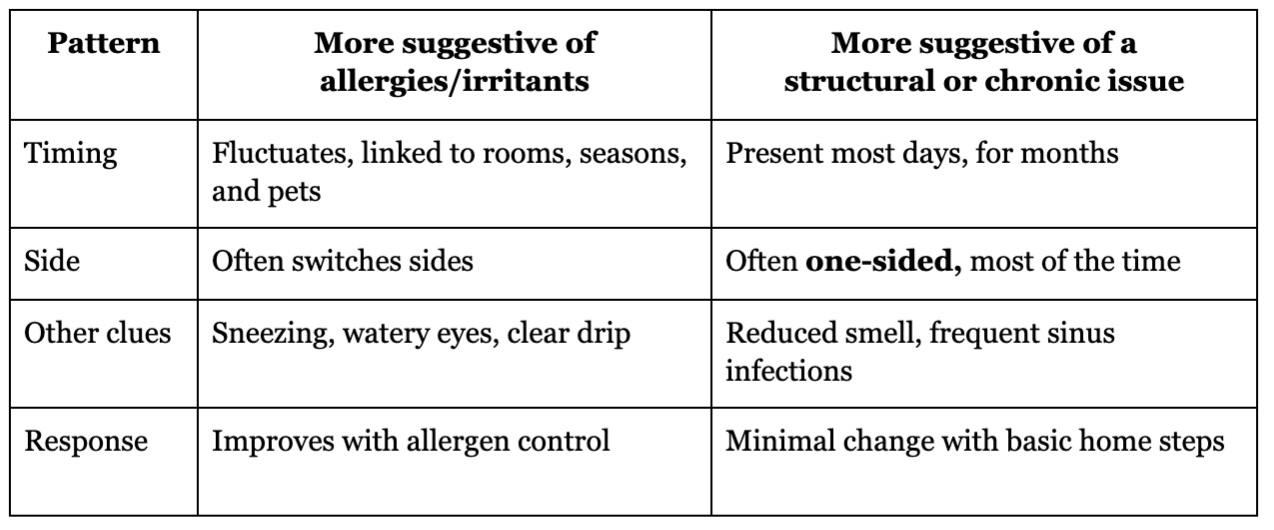
If you’re stuck in the “I can’t tell” zone, that’s a good reason to get evaluated rather than living with it.
What To Do Tonight and When To Get Checked Out
Small changes can have a big payoff because they reduce exposure for 6 to 8 straight hours. Start with the simplest steps first, then move up to targeted care if symptoms persist.
If you’d like personalized support, including allergy evaluation and whole-person health planning, explore Dr. Deepa Grandon’s medical services, which include telehealth across all 50 states.
Simple Bedroom Changes That Often Make the Biggest Difference
Try two or three changes for one week, then reassess.
- Wash bedding weekly in hot water: Helps reduce dust mite load and dander.
- Use allergen-proof pillow and mattress covers: It creates a barrier where you breathe the closest.
- Reduce clutter near the bed: Fewer surfaces for dust to settle.
- Vacuum with a HEPA filter: Traps fine particles instead of blowing them back out.
- Keep pets out of the bedroom: Dander sticks to fabric and stays airborne overnight.
- Aim for 40 to 50% humidity: Supports nasal moisture without pushing mold growth.
- Fix leaks and damp spots: Mold thrives on hidden moisture.
- Consider an air purifier: Helpful if you can’t remove carpet or you live with pets.
- Shower before bed during high pollen times: Gets pollen off hair and skin.
If you want a plain-language list of home options that can help you feel less blocked, see Everyday Health’s natural congestion remedies.
Nasal Care and Meds, What Helps and What To Avoid Overusing
For many people, the best nightly routine is gentle and consistent.
Helpful basics:
- Saline spray before bed can loosen mucus and soothe dry tissue.
- Saline rinse can wash out allergens and thick mucus (use sterile or distilled water, or water that has been boiled and cooled).
- Warm shower or steam can temporarily open airflow.
- Hydration supports thinner mucus.
Medication options to discuss with a clinician (especially if symptoms are frequent):
- Oral antihistamines (often helpful for allergy-driven symptoms)
- Nasal steroid sprays (often effective for ongoing inflammation, but they need daily use for best results)
- Allergy testing and targeted treatment if triggers aren’t clear
Important caution: Decongestant nasal sprays can cause rebound congestion if used more than a few days in a row. That cycle can keep you stuck, feeling blocked every morning.
For a clinician-reviewed explanation of how allergies and sinusitis differ (and why treatment isn’t the same), this WebMD guide on sinusitis vs allergies is a useful reference.
A Quick Decision Guide on When To Call a Clinician or Seek Urgent Care
Call a clinician (virtual or in-person) if you notice any of the following:
- Symptoms last more than 7 to 10 days without improvement
- Frequent sinus infections, or symptoms that keep returning
- Ongoing loss of smell
- You suspect sleep apnea (snoring, gasping, major daytime sleepiness)
Seek urgent care sooner if you have:
- High fever
- Severe facial pain, swelling, or redness
- Thick, foul-smelling drainage
- Trouble breathing
- Congestion with wheezing or chest tightness
If you want a broader, reader-friendly overview of why mornings can be worse and what tends to help, this USA Today's explainer on morning nasal congestion lays out common patterns.
Stay connected with news and updates!
Join our mailing list to receive the latest news and updates from our team.
Don't worry, your information will not be shared.
We hate SPAM. We will never sell your information, for any reason.