
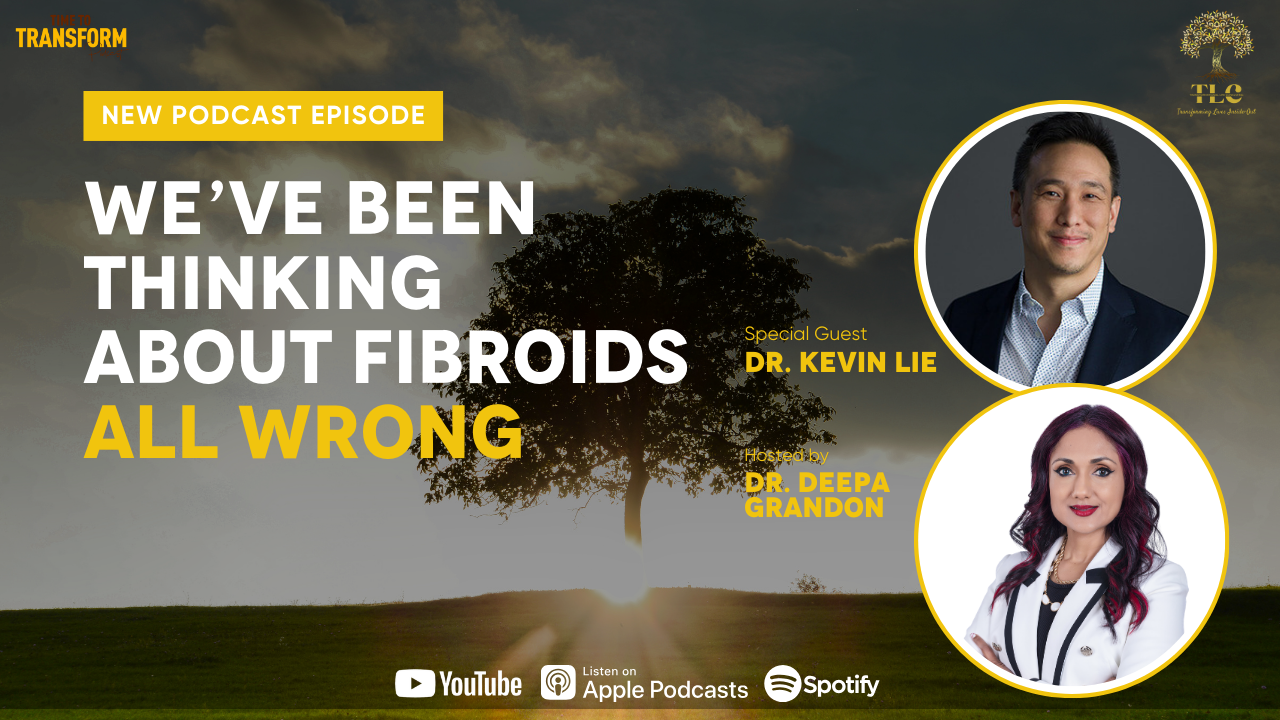
Most people have been told fibroids are “just a woman’s issue.” A benign growth, a heavy period, and something to tolerate, manage, or eventually remove.
That framing is dangerously incomplete.
What if fibroids aren’t just a local gynecological problem, but an early warning system? What if they’re a vascular signal pointing to deeper inflammation, metabolic dysfunction, and cardiovascular risk?
We’ve been trained to silo the body. The uterus belongs to gynecology, the heart belongs to cardiology, and metabolism belongs to endocrinology. Stress is “just stress.”
But the body doesn’t live in departments.
Inflammation doesn’t check which organ it’s allowed to affect. Blood vessels don’t confine themselves to one specialty. And hormones certainly don’t stay politely inside one system.
So when a woman presents with heavy bleeding, pelvic pressure, anemia, exhaustion, and mood changes, maybe the question isn’t just, “How do we remove the fibroid?” Maybe the better question is, “What environment allowed this to grow?”
Because fibroids are estrogen-responsive, blood-supply dependent, and influenced by metabolic signals. And when we start looking at them through that lens, they begin to look less like isolated tumors and more like biological feedback.
What has changed about how the medical community understands and treats fibroids?
I’m joined by the head of vascular and interventional radiology at Georgia Endovascular, Dr. Kevin Lie. Dr. Lie approaches fibroids not as isolated tissue growths, but as vascular phenomena. Together, we explore what it means to see fibroids as systemic signals, how vascular health and hormonal health intersect, and why the future of women’s care may depend on breaking down the walls between specialties.
Most of the pathology and symptoms of uterine fibroids are actually related to the blood vessel side, so we focus on looking at a fibroid like it’s a vascular issue. -Dr. Kevin Lie
Things You’ll Learn In This Episode
Fibroids may be a vascular warning sign
We’ve treated them as isolated uterine growths. But what happens when we see them as part of a larger inflammatory and cardiovascular story?
Inflammation is the common denominator
The same diet, stress, and metabolic imbalances that damage arteries may also feed fibroid growth. Are we addressing symptoms while ignoring the soil?
Heavy bleeding isn’t just inconvenient, it’s systemic
Chronic anemia affects mood, sleep, stress hormones, and immune resilience. How many “secondary” symptoms are actually central to the problem?
Lifestyle and procedures aren’t opposites
Minimally invasive interventions can reduce suffering quickly. But how do we build care models where lifestyle medicine and procedural medicine reinforce each other instead of operating in silos?
Stay connected with news and updates!
Join our mailing list to receive the latest news and updates from our team.
Don't worry, your information will not be shared.
We hate SPAM. We will never sell your information, for any reason.